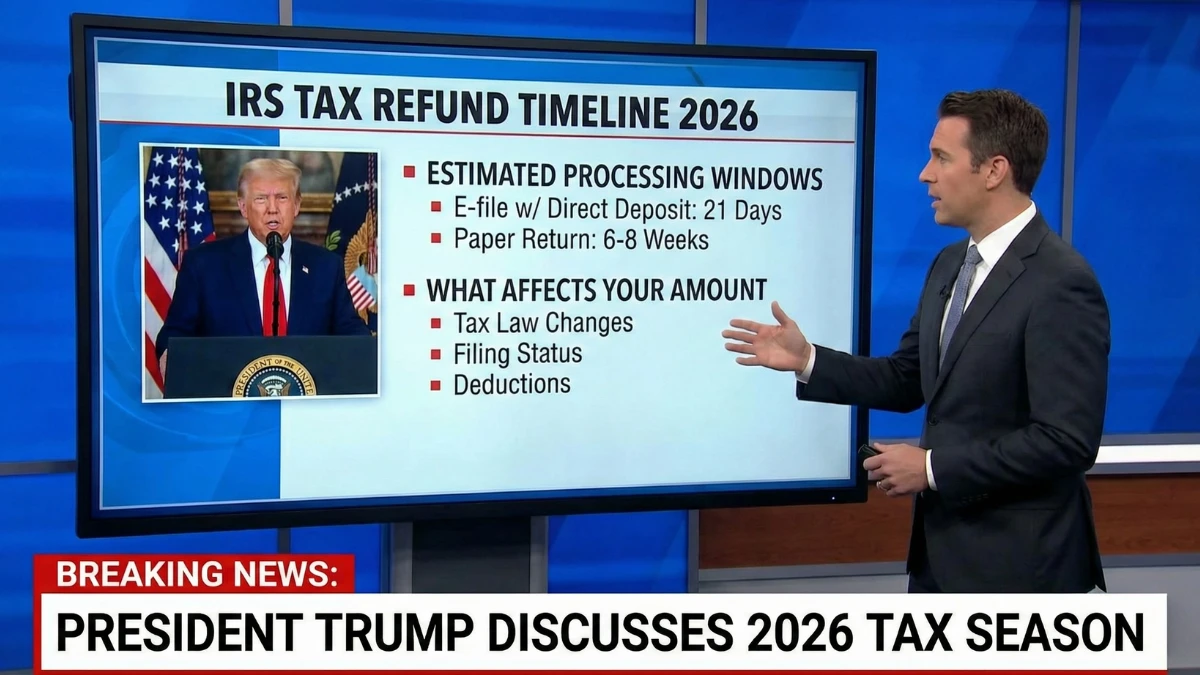
Interest in the IRS tax refund schedule for 2026 is growing as taxpayers plan when to file and when refunds may arrive. To avoid misleading claims, it’s important to note that the IRS does not publish a fixed refund calendar or guaranteed amounts. Refund timing and amounts depend on how and when a return is filed, accuracy, credits claimed, and processing checks. This article explains the realistic refund windows, how amounts are determined, and what taxpayers can expect from the Internal Revenue Service.
Is There an Official IRS Refund Schedule for 2026
No. The IRS does not release an official refund schedule with exact payment dates or preset amounts. Refunds are issued on a rolling basis after returns are accepted and processed. Any website listing exact 2026 refund dates or fixed amounts should be treated cautiously.
Estimated IRS Refund Processing Windows (Based on Standard Practice)
| Filing Method | Typical Refund Window |
|---|---|
| E-file + direct deposit | About 21 days after acceptance |
| E-file + paper check | Longer than direct deposit |
| Paper-filed return | Several weeks or more |
| Amended return | Up to several months |
| Returns under review | Timing varies |
How IRS Refund Amounts Are Determined
Refund amounts are not pre-set. They are calculated based on income, tax withheld, credits claimed, and any adjustments during processing. Credits such as refundable tax credits can increase a refund, while errors or offsets can reduce it.
Why Some Refunds Take Longer
Delays usually happen due to accuracy checks, missing information, identity verification, or claims that require additional review. These are standard safeguards, not new rules for 2026.
When Refunds Are Typically Released
Once the IRS completes processing, refunds are sent immediately through the selected method. Banks then control when funds are posted, which can add an extra day even after the IRS releases the payment.
How to Check Your Refund Status
Taxpayers can track progress using official IRS tools after filing. Status updates reflect processing stages and should be used instead of third-party estimates.
Key Facts
- The IRS does not guarantee refund dates or amounts
- E-filing with direct deposit is usually fastest
- Paper and amended returns take longer
- Refund amounts depend on individual tax details
- Only official IRS tools provide accurate status
Conclusion
The IRS tax refund timeline for 2026 will follow established processing practices, not a fixed schedule. While many refunds are issued within a few weeks of acceptance, exact payment dates and amounts vary by return. Taxpayers should rely on official IRS updates and avoid claims promising guaranteed refunds.
Disclaimer
This article is for informational purposes only and does not constitute tax, legal, or financial advice. Refund timing and amounts depend on individual filings and official IRS procedures.