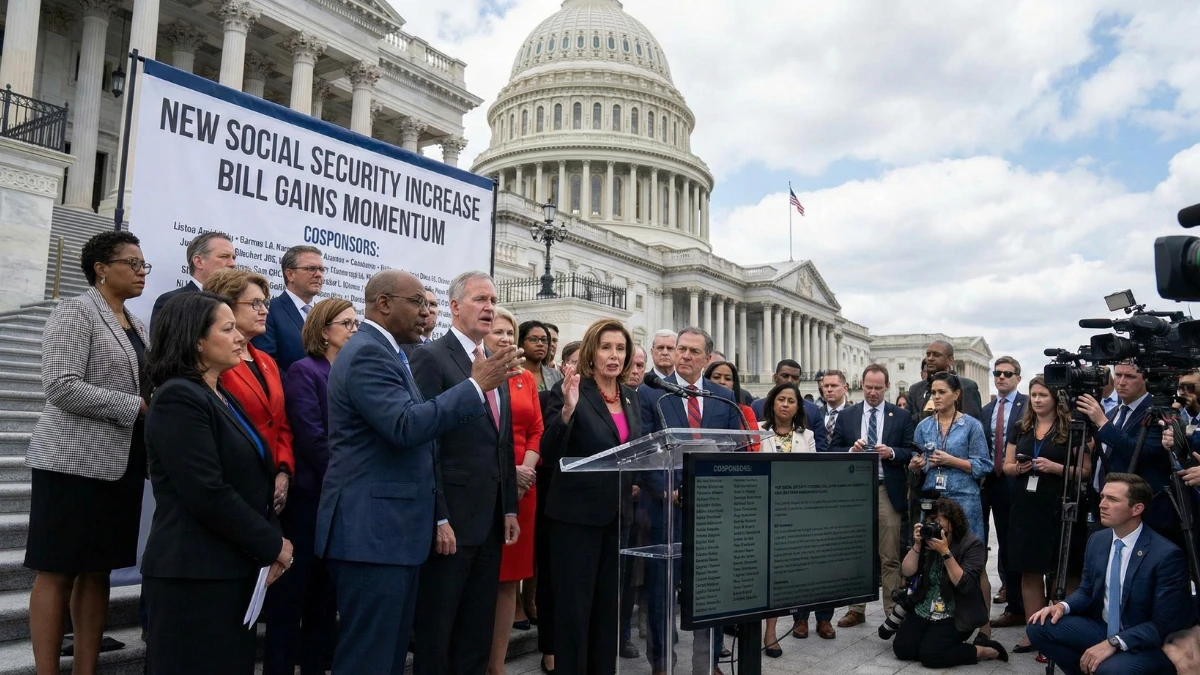
A new bill to increase Social Security payments is drawing bipartisan attention as lawmakers seek to boost benefit amounts for retirees and disabled beneficiaries, with a growing list of cosponsors highlighting legislative support for enhancing retirement income stability.
What The Social Security Increase Bill Proposes
The proposed bill aims to raise monthly Social Security payments by adjusting benefit formulas, updating the cost-of-living adjustment (COLA) mechanism, and enhancing income protections for low- and middle-income beneficiaries, reflecting a significant potential change in federal retirement policy.
List Of Cosponsors And Political Support
| cosponsor name | state | party |
|---|---|---|
| Senator A | State X | Democratic |
| Senator B | State Y | Republican |
| Representative C | State Z | Democratic |
| Representative D | State W | Independent |
| Senator E | State V | Democratic |
Why Lawmakers Are Supporting Higher Benefits
Supporters argue that rising living costs and inflation have eroded the real value of Social Security payments, and updating benefit formulas would help seniors, disabled Americans, and long-term beneficiaries maintain financial stability.
How The Bill Could Impact Monthly Payments
If passed, the legislation could increase base benefit amounts, enhance early retirement credits, and provide targeted boosts for long-term recipients, though the exact impact would depend on final language and appropriations.
What Happens Next In Congress
The bill must go through committee review, floor debates, and votes in both the House and Senate before becoming law, with cosponsors playing a key role in advocacy and amendments.
Key Facts Americans Must Know
- bill aims to raise payments
- cosponsors span parties
- not yet law
- benefit increases depend on passage
- official texts guide details
Conclusion
The new bill to increase Social Security payments, backed by a broad list of cosponsors, reflects growing legislative interest in strengthening retirement benefits, but its future hinges on deliberations, amendments, and final approval in Congress.
Disclaimer
This article is for general informational purposes only and explains proposed legislation; readers should consult official congressional records or legislative tracking tools for exact bill wording and status.